zaterdag 31 augustus 2013

Vietnam DWS Trip 2013 - Climb high and splash it deep ...


Climbing in its most natural way everybody can do. You do it barefoot without any help of shoes neater of chalk. You don’t even have to use a rope, a harness or a belay bunny. You’re free to move wherever you want; up, down, left, right.  One thing you have to keep in mind is where you will climb. Not everybody is willing to climb free and solo at a height of 10 up to 500 meters like some of the climbers out there. The safest way to climb so naturally is above the water. The amazing sport of Deep Water Soloing gives us the possibility to climb whatever you want wherever you want to climb, as long as it is above deep enough water.

The idea
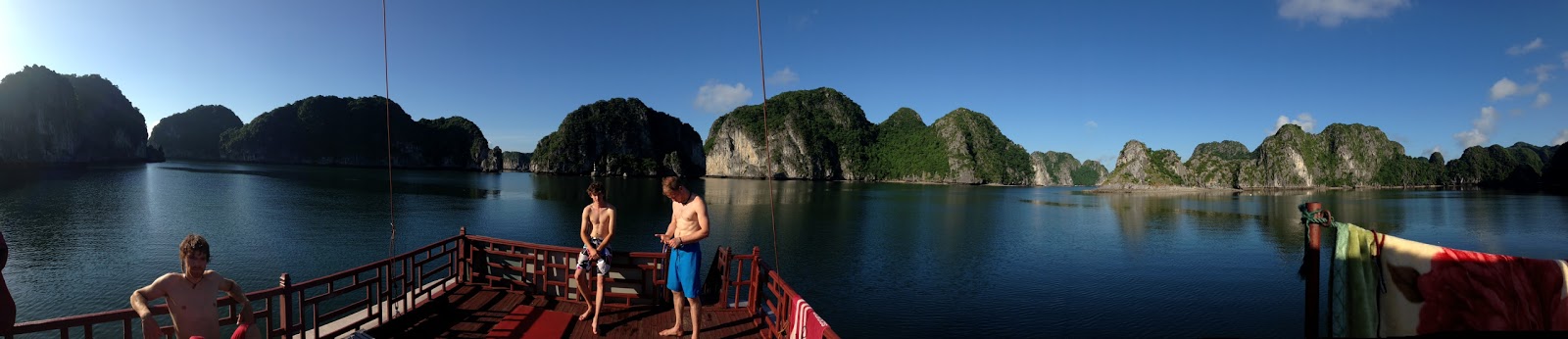

In 2008 I made a trip towards Mallorca where I climbed the first time above the water, I was excided but since then I never made a Deep Water Solo trip anymore up to last month of August. Together with a team existing out of 4 British climbers I went towards Vietnams Ha Long Bay and Lan Ha Bay. One of them was George Ullrich, the crazy Brit that joint the Venezuela expedition in 2012. When he asked me in February to join the Vietnam DWS trip I didn’t hesitate much to make a decision. Our team existing out of Jake Rogers, Matthew Burdekin , Liam Lonsdale, George Ullrich and myself had a specific goal. We knew the area existed out of a million small islands with a lot of limestone rock faces, sometimes above the water and sometimes not. Our goal was to search and find new yet unclimbed rock faces that we could climb up to a proper height above the water. We did research about the already developed crags or all the places climbers had been. Next thing we selected some areas, which we had no information of and assumed no climber had been there yet, to explore on our fourteen-day journey on a boat.
Epic journey …
We rented a boat in Cat Bá Island relying on the outdoor company Asian Outdoors. The boat itself was from a small company of Vietnamese in Cat Bá. First, George and I had some epic time getting on Cat Bá Island while the rest of the team was already there.  After George missed his connection flight in Helsinki he arrived 12 hours later in Hanoi, Vietnam. But still we couldn’t make our way to Cat Bá Island because Finnair lost my bag in Helsinki. We both had to spent one day extra in the big chaotic city of Hanoi waiting for my bag, which finally arrived about one day and a half after I arrived in Hanoi. After all it wasn’t that bad. Getting from Hanoi to Cat Bá Island we had to take some busses and a boat. Normally not a big deal but this day a storm was hitting the island and the main land with the result a lot of the transitions were cancelled. We ended up being hassled in Hai Phong, where we would take the boat to Cat Bá Island, by the Vietnamese boat business guys who each told us their boat would go but finally didn’t. The Vietnamese are friendly people but when they see western travellers they try to take advantage of them. It’s hard to ask for help because they just want to survive and make money so every question you ask them that hasn’t anything to do with their business they wont always answer. It is frustrating as a traveller but you cannot blame them for trying to survive. So at least we could leave Hai Phong the same day we arrived there but we ended up paying a lot more then we should have. Those are the mistakes you sometimes make travelling through a foreign country with another culture.

Discovering our environment
Once we were on Cat Bá Island we didn’t have to wait much longer anymore. The next day early in the morning we left the main land and loaded our bags on the Lan Ha Cruiser, the boat that would be our house for the following 14 days. The five land rats where impressed about the size of the boat. When you enter the boat from the front and go inside you first pass the dining table and captains wheel. Further on we had two rooms with in every room two beds and a bathroom. Yes you read it well; we had a shower on the boat, luxury. The boat had water reservoirs to provide the team of running water. During the trip we run out quite a bit of water what made us go back to the main bay, Bai Traï Dau, close to Cat Bá Island to get water from a big water tank boat. In the back of the boat was the kitchen, the place where the magic happened. With a 40 litre jar of the main ingredient for all dishes, oil, greasy! The place where we’ve spent a lot of time was the deck. The deck of the boat was big and perfect for sleeping, chilling, playing chess, searching for crags and crazy lightning parties in the rain. 
First thing we got to meet the boat crew existing out of a local guide, a cook, a captain and the captain of the little boat, basket boat. Our local guide is an amazing kid named Than, he’s 20 years old and only climbs since one and a half year. The special thing about this funny guide is that he’s a motivated bastard that climbs always barefoot. Than has a pair of shoes that are 4 sizes to big. If he uses them he likes them a lot, it’s like barefoot climbing but with rubber protection… crazy little Vietnamese he is. 


Than knows the area around Lan Ha bay quite well. The first days he showed us around the best crags. We climbed some of the established DWS lines and sport routes. In the start of the trip we did some sport climbing because the tides of the water were to low for DWS. It’s important to always check the tides and the depth of the water. The sport climbing around the islands is pretty good, a lot of different styles and limestone rock types. The only thing is that there is never one area with more than a handful of routes. They also are not always easy to access. But we didn’t came al the way to Vietnam for sport climbing, so soon we moved on when the tides were better towards the DWS cliffs and took our time to get used to the climbing and the height above the water. 


DWS climbing is a different thing. I remember the first day quite well; ‘Shit, I’m not going to be able to commit for hard moves high above the water.’ But after only one day the DWS headspace came back. You’re a free climber, you can climb where you want and as high as you want. It’s an amazing feeling once you’re comfortable with the height and falling into the water. You can follow the obvious lines in the wall, whether they traverse 10 meters to the left or right, if it’s a clear line you can follow it and you’re not limited by the bolts. In the start we had to learn how to fall down into the water without getting hurt. The perfect splashdown is to fall with a relaxed body using your arms to stay in balance and then finally hit the water feet first and with your arms against the body. It’s an amazing feeling when you can climb 15 to 20 meters as a free man to the most obvious top out. 
In the mean time I got to know my crew a little bit better. From the start the British humour filled up the air with a good atmosphere. Slowly I adjusted my American English accent to the British North Wales accent and was able to understand my British friends a little better. With Liam as a stand-up comedian full of shit, Matt the big guy who never turns his back to the funniest idea’s, Jake the tactful joker, George the team leader and Than our impressive barefoot climber and social guide we climbed almost every single day of our trip and had a good time on the boat. Mornings filled our stomach with western food like white bread and condensed milk with sometimes some rice bread what we called ‘rice pillows’. This breakfast wasn’t very popular with the team but still it did its job and filled us up every morning. Lunch and dinner existed out of typical Vietnamese food with rice and lots of fried veggies, meat and fish. In the beginning very popular within the team but after several days the oily food started to work bad on our stomachs. We asked for less fried food what we got, but still I think our Vietnamese cook wasn’t used to cook things without frying them. After all we couldn’t complain that much when you’re served two weeks long on a boat.

Our first exploring trips


After some days of climbing established routes we grabbed a map of the islands of Lan Ha and Ha Long bay and pointed some spots out to our captain of which we wanted to search for potential DWS cliffs. With our ‘slow’ boat we moved along the cliffs. The first few days of exploring we stayed close to developed areas. Close to the famous Ba Trai Dào we found what we called ‘Cashew Cove’, an area with three main walls that we climbed all new routes on. On the ‘Corner wall’ George and I had been trying an amazing athletic line with several big moves up to the crux at a height of 8 to 10 meters. We both fell every time in the same move, which we tried several times in different ways.  This is the difficult thing in DWS climbing, it’s like the old school Yoyo-climbing style where you when you fall have to climb al the way to your previous high point again to try the crux. It’s not possible to work the moves for a next attempt. You’re basically always on sighting as soon as you pass your high point, definitely when nobody has ever climbed there. George and I tried this project over and over again but without any success. We ended up doing really long moves to crazy slopers that we couldn’t hold. At the end I went up the cliff on the left side and found a traverse above our high point of the project, now I could see the holds and I concluded this would be a very hard line to climb as a DWS line. Up to the crux the project is definitely an amazing 7c+ worth to try. 

We found more amazing climbing in the area of ‘The Face’, an amazing flowstone face with two nice 7b/+ sport climbs. One of the walls we found we called ‘Razorblade wall’. On this one we climbed a fun dyno low above the water which leads towards a series of long dynamic moves on a steep wall. On the right of this classic we found another project. Every time each of us climbed a little higher on the project up to the point where I grabbed a crucial hold that broke and spit me off. This is how the climbing was like during this DWS exploring trip. Every route you climb is new and the rock has never been touched before. Often you’re climbing slow and steady searching for the right hold to get your way up. Sometimes the holds didn’t feel solid but you still have to trust them and go for it. This project we left behind because of the super sharp rock and because we had to move on. 
First ascent and on sight climbing
Climbing on rock that has never been climbed on is always exciting. But when you climb on virgin rock above the water and you never now when the rock will break it’s even more of a head game! This trip taught me a lot about first ascent climbing and searching for new holds and lines. I started to develop my eye for finding the best and most logical lines and when you find and climb them it’s such a good and satisfying feeling. At the start of the trip I climbed still insecure and hesitated a lot about what was coming but also because of the free air underneath me. Instead of hesitating you need to climb quick and try not to waist too much time searching for holds. I noticed that when I wasn’t scared to fall anymore I felt stronger and could climb better. I started to commit for hard moves without thinking about falling deep into the water, that’s when I knew I started liking DWS climbing even more. You get into a flow and the only way is up! 
Search and Find
During this trip we’ve spend a lot of time on the boat driving through al kind of bays searching for the perfect crag. We found a lot of small crags with also nice lines but we wanted to find a big area with good rock and a lot of potential lines and projects. Exploring can be tiring and despaired. We had days we searched whole island groups but couldn’t find a single good wall that could get us excited. After some days of searching it’s important to keep the head up and not lose the hope to find a wall. 

The time had come… One morning we woke up another day at 5 am, woke our captain and put him behind the wheel for a new exploring trip. That day we were going up North-east of Cat Bá Island in Ha Long Bay. This is when we found an amazing wall that at first didn’t look like it had many lines on it but finally we managed to climb about 10 lines with 3 more projects and much more potential. This wall we called ‘Hueco Wall’ due to the many big basin-like forms in the wall. Even before 7 am we climbed the first 15-meter line on the wall and were psyched to climb them all. We ended up climbing about three days on this wall discovering lines every minute. The climbing style is funky with a lot of knee bars and compression moves on pinches and slopy holds. The lines we opened we graded between 6c and 7c/+ with potential for some more and maybe harder. Hueco Wall is definitely a wall that will become popular in the future of Ha Long Bay DWS.
The sea and its creatures! 
On the first day at Hueco Wall I climbed a line called ‘Zues’s sea snake’. The climb got its name thanks to the situation after I climbed it. As soon as I dropped into the water from the top of the climb my team members on the boat started yelling at me to swim quickly to the boat. I followed their advice until they started yelling even more and told me to swim back to the rock and climb on again. I followed their advice again without really knowing what I was doing. A little worried but still thinking they were pulling my leg I swam to the rock and climbed back on a ledge. When I stood on the ledge and turned around I saw a sea snake swimming really fast with his head sticking out towards the rock about ten meters away from me were it slid up into a hole 30 cm above the water surface. A scary moment I’ll never forget. Afterwards the basket boat driver told us a bite of this kind of snakes is deadly and you will not have much time to survive. I realise I was pretty lucky. The team was a little shut down after this incident but still we managed to climb on. Since then, every time someone fell into the water the jokes stopped and we looked out for more of those deadly sea animals. 
The sea snake we saw only once, but what we did see many times were jellyfish. Most of the times we could see the jellyfish and were able to avoid them when we were in the water. We always relied on each other to swim back to the boat waiting for our team members to give you an update of where the jellyfish are. In the start you’re scared of them but after a while you start to get used they are there. At places with lots of jellyfish it was important always to look down at the water before you jump of to make sure they were not floating around underneath you. 
Arm wrestling as recuperation activity
Going back to the mainland we discovered some of the Vietnamese culture. Walking along the street we passed many karaoke bars with dozens of hyperactive Vietnamese singing and screaming. Matt took their attention with his tall stature and they dragged us in. What should have happened then, didn’t happen. Instead of singing gay music we ended up in a game of arm wrestling. First Matt started off with two Vietnamese guys. Then I was next, I had never done any arm wrestling before but I was going wild against those strong little bastards. I ended up beating 6 Vietnamese guys, where after my arms fell off. After me it was Liam’s turn, he stole the show taking off his t-shirt and making the hyperactive Vietnamese even wilder. We were like some foreign heroes for them that evening and ended up on pictures on all their smart phones. 
The DWS exploring trip in Vietnam was a great experience. We searched and searched a long time and I’m happy to say we found some great walls and amazing climbs with good rock. Although the contrast with my month of alpine climbing in Chamonix was pretty big I could get used to the climbing and the lifestyle on the boat. I have to say I still prefer the mountains with its traditional climbing. But still, this was an amazing trip. As long as there is a head game going on in climbing I’m satisfied, and so it was with Deep Water Soloing. 

I still want to thank Jake, Liam, George, Matt and Than for their amazing company and the good time we had! It was a bunch of crazy wanckers on a boat, climbing every single day above the water in an amazing environment with an amazing atmosphere. We searched and found new crags and climbs. Every new route and crag we developed has been written down and turned into a guidebook with pictures, the drawings of the climbs with an explanation and all the information necessary to go out there and repeat our routes! I will soon post the guide on my blog. I highly recommend a trip like this if you like sea, sun, a foreign culture and some high climbing above the water.  


zondag 28 juli 2013

The Doors and Grazie Ricky - Cadarese splitter fun!


The last part of our ‘crack’-climbing trip in and around the Mont Blanc massif Tim and I needed some single pitch to recover of all the multipitching in the mountais. We went for the three-hour drive towards Cadarese, Italy. Everybody who has been there will now think: ‘Cadarese? In the summer? It’s so hot!’. And yes indeed, Cadarese was hot and sweaty but still we could climb and the climbing felt good. Unless you like sweaty and hot cracks Cadarese is definitely not a summer destination. From down in the valley, the hill of Cadarese looks like a big chunk of rock and trees with not much interesting climbing. But once you hike up you find yourself behind all the threes in front of perfect granite crack systems of about 30 meters. 
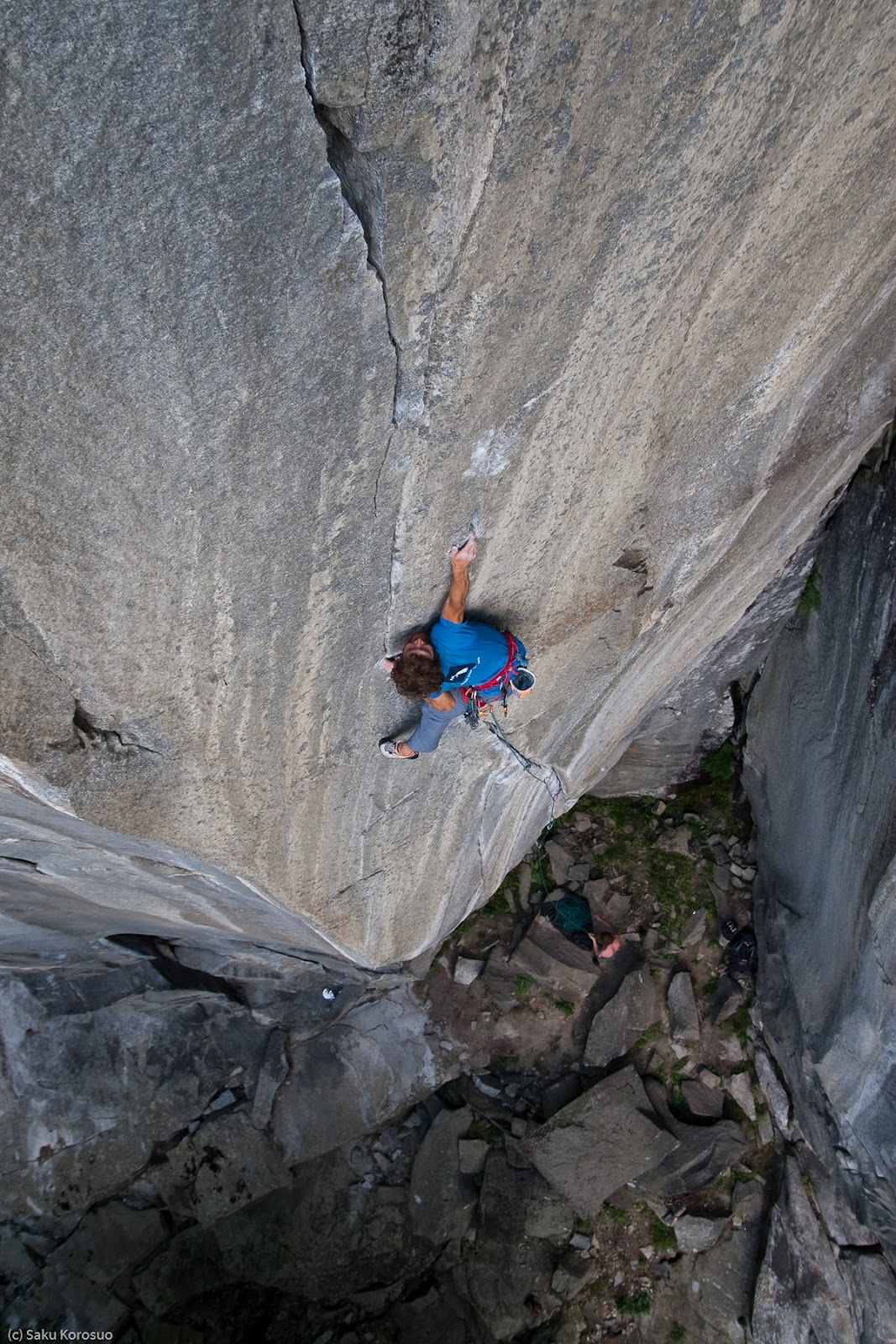
The Doors on the right on the face.
Since last summer I had been thinking about going to Cadarese. Not only for the amazing single pitch crack climbs I would go there but I had one specific route in mind. ‘The Doors’ (8b) is an amazing splitter crack of 35 meters. Originally ‘The Doors’ has been opened as a sport route, with bolts. But recently the Italian guy Matteo Della Bordella chopped the bolts and climbed it free on natural protection. This is what makes the line pure again! 
Our first day climbing in Cadarese was a cloudy day after a night of big thunderstorms. A lot of the humidity was out of the air and the upper sector where The Doors is situated had even a little breeze. After warming up we immediately went for a look on The Doors. When I first saw the crack I was amazed! A perfect 35 meter splitter with not much cracks systems around to use. A good looking crack without any bolts.

After my on sight success of Ave Cesar in the Petit Clocher du Portalet I decided to give this route a good on sight attempt to. I read the crack, prepared what I thought that would be the right gear for it and put myself into jamming mode! With a little stress I entered the crack smoothly but then some hesitation came. Only a few meters of the ground I came out stupidly, I made a little mistake and my on sight attempt was over. I pulled myself back up and climbed quickly and easily to the crux in the middle. I checked out the middle section moves and climbed to the last tricky crux moves at the end. Both cruxes I could do quickly so I think a better on sight attempt was possible but a mistake is quickly made. So the next goal for me was obvious, I would try to do it second go!


This time no stress or what we call ‘brain farts’ while giving it a second go. I knew the moves and the gear by heart and only had to dance it up to the top. And so I did, I climbed The Doors in my second go. When you do the moves of a crack climb right and precise and realise to send it things can suddenly feel easy, this time it was no different. About the quotation of this route I have to say it felt slightly harder then the crux pitch of Ave Cesar in this similar style. I would give it a grade of 7c+/8a but every climber is different and like we know is every crack different for every other climber. Cracks are a lot of the times size dependent so grades are useless in this style of climbing. You fit or you don’t.


After three weeks of granite climbing I had found it, it was back into my body. I started to move really smoothly in all the routes I tried and had a good feeling. Also my head was free of scared thoughts of falling onto little gear. I placed gear well and trusted every peace, and even if not I went for it. It’s such a good feeling when you’re used to the rock and the movements. Having a good headspace makes the climbing even better. 
Val de Formazza is an amazing valley. It’s a pretty wide valley with some cool fields next to a river. For camping it didn’t seem like a problem to camp next to the river in one of the grassy fields. Local people are nice and interested in the climbing. They don’t seem bothered with the climbers hanging around. It felt good to enjoy the simple life of the single pitch climbing where you cook next to the car and make whatever you want. Food was quite important in those ‘recovery’ days. 
We found a new little house! 

On our last day I tried a bolted route called ‘Grazie Ricky’ (8a). This sport route has some vertical edges and a compression section in the middle but also looks a lot like a crack climb. From a first look at the route it was clear to me that it would go without the bolts. The start of Grazie Ricky shares a crack with a 7b+ on the left where after it passes a ‘fridge climbing’ section without much natural protection. There after protection is good up to the final crux at the end. You place one last good friend and the last little game has to go quickly. You move out of the crack and climb on some perfect horizontal ledges, one big lock off and run it out up to easier ground and finish the route. Also this one I could climb smoothly on my second try. This climb was more in the trad climbing style of the British. Again an amazing bolted line in Cadarese waiting to be relieved of its bolts by some Italian guy? 
On our last day I was lucky to meet up with two Finnish climbers: Saku en Anu. A great and motivated couple who are on a trip in their van in Italy and Switzerland. Saku was so friendly to put some effort into taking some pictures of me in ‘The Doors’ on his rest day. The pictures you see in this post are his work, thanks a ton for that Saku! This Finnish beast is not only good in taking pictures. He made an ascent of the famous Cadarese off width ‘Turky Crack’ and could also prove his technical climbing in the thin finger crack ‘Mustang’. Good job Saku! Definitely read some of his stories on his blog! (http://korosuo.com)
With those two beautiful lines I end my granite-climbing season for a moment and the amazing trip with Tim De Dobbeleer. It was an amazing month with a good and motivated climbing partner! Thanks for that Tim. We had the same objectives, goals and most of all: the same spirit! I will miss the granite, the trad climbing and the magical mountain atmosphere for some weeks now. Last month I discovered an amazing love and peaceful feeling for the mountains and it’s crack climbing. I’m looking forward for more trips in Europe, South America, North America and Asia to combine my love for rock climbing and mountains! 
The reason my granite trip ended is because it’s time for a new objective now. This time something completely different, something without ropes, harnesses or gear. The protection for the climbing will be the sea of Vietnam’s Ha Long Bay. 


Thanks to Saku Korosuo for those pictures!


A little resume of ‘The Granite Trip’:
  • Elixir D’Astaroth - ED+ 7a+ - 14 pitches – Grand Capucin
  • Les Intouchables – ABO 7b+ - 7 pitches – Trident Du Tacul – Onsight 
  • Voyages Selon Guilliver – ED 7a – 14 pitches – Grand Capucin 
  • Bridwell Crack – ED 7b+ - 6 pitches – Petit Clocher Du Tacul – Onsight
  • Divine providence – ABO 7b+ - 900 m – Grand Pillier d’Angle top out on Mont Blanc – Onsight
  • Ave Cesar – ABO 7c – 8 pitches (250 m) – Petit Clocher du Portalet – Onsight
  • The Doors – 8b (7c+) – Cadarese – Second go
  • Grazie Ricky – 8a (Trad) – Cadarese – Second Go

dinsdag 23 juli 2013

Le Petit Clocher du Portalet - On sight party!


Divine Providence sloped our bodies and brains for two days. We had to pay the price for the three hard and long days being in the mountains and abusing our bodies getting up the Mont Blanc taking the difficult way. Two days we did nothing but eating and hanging out. The two of us still bringing up memories of the climb enjoyed being lazy. No beer or wine for celebration but food! We ate salty pancakes in the evenings and sweet pancakes in the mornings, a real stomach party. 
First climbing we did again was in the sport climbing area of Bionassay, near Salanches. There we climbed for two short days on some perfect limestone. This is a perfect area for when the weather in the mountains is rough. Because of the amount of thunderstorms they announced every evening we took off towards Switzerland where we climbed in Petit Clocher du Portalet for two days. Le Clocher is at a height of 2800 meters so there’s not much snow any more. The same day we climbed in Bionassay we left for Le Clocher. The morning after we hiked up the 2/3-hour hike at 7 am to climb a route before the thunderstorms would come. 
Me in the 7b+ diagonal crack.
We didn’t climb just a route in le Clocher. I had a goal I had in mind for about a couple of weeks already. I did a successful on sight attempt in ‘Ave Cesar’, a real 6-pitch 7c. This is by far my best on sight on trad and granite I’ve ever done. The line climbs first an easy scrambling pitch followed by a short 6b+. Then the party starts. An amazing 7b+ pitch starts off with a hard and technical boulder on tiny crimps leading towards a slightly diagonal crack (20m). To on sight this first one focus and perfection where necessary. This ‘warm-up’ pitch was followed by a wider 6c. 
Then the two crux pitches (both 7c) loomed at us. The first one was a short but thin fingertips crack of 9 meters long. Slowly but calculated I found my way up this one to. The feed where small and preciseness was important to make slow progress. Happily I arrived at the anchor off the first one and amazed I looked up towards the longest and hardest crux pitch of Ave Cesar. A 35-meter long perfect 0.75 BD crack with a thin crux at the end was waiting at us. I wasn’t scared for the ‘ringlock’-climbing in the green camalot size because off my big sausage fingers. I went smoothly up towards the crux where I cracked trough the crux on some vertical crimps and fingertip jams. Also this last and hardest pitch I could on sight. This was an amazing feeling. I realise that our last few weeks climbing on granite seriously affected my climbing style. It’s nice when things go smooth and controlled. 
Tim in the last crux pitch.
Me in 'Esprit de Clocher'
After this perfect day we climbed another 6-pitch route called ‘Esprit de Clocher’, a classic 7a we could do in a little less then 3 hours. Not only the feeling with the rock but also the efficiency as a team between Tim and I is going well after several weeks of multipitch climbing. 
Now we’re heading off towards our next destination for some days. This time it’s not going to be any multipitch climbing any more. We need some crack single pitch climbing now…
‘Ave Cesar’
5th- 6b+ - 7b+ - 6c – 7c – 7c – 6b+


The Nr. 0.75 BD Cam crack!


Tim in the bouldery start of the 7b+. 
Tim's Cruxinnn!!!


donderdag 18 juli 2013

Divine Providence – A hard but satisfying journey

The G.P.A. on the left and the arête de Peutrey on the right that leads towards MB de Courmayeur. 
My calves were screaming for some flat ground, we had been climbing on a 40° snow arête for about 3 hours on our third day climbing one of the best climbs I’ve ever done. When I looked up I saw Tim just pulling over the lip of the mountain. It was Mont Blanc de Courmayeur. Tim was on top and screamed loud, I still had to climb 20 meters before I also topped out. Those 20 meters were amazing; the view, the sun, the feeling, the satisfaction, the relief,… Most of all knowing we had just free climbed ‘Divine providence’  (ABO 7c, 900m) on sight and where going to top out on the Mont Blanc for our first time. What a magical moment. 
One of our objectives for this trip was to try and reach the top of the Mont Blanc climbing one of the most difficult and complete lines. We were told of ‘Divine providence’, a route that climbs the 900-meter wall of the Grand Pilier d’Angle on the Northeast side of the Mont Blanc. The two most important reasons we wanted to attempt this classic but difficult climb was to climb the nine amazing crack pitches in the middle free and reach the top of the Mont Blanc for our first time. 
François Marsigny and Patrick Gabbarou have opened the route in 1984 at a grade of ABO A2/A3. Lately it has been free climbed more often and the route became more popular. 
Me from belgium, me not trust 'serac'
Although the Grand Pilier d’Angle is on the Italian side of the Mont Blanc, we started our trip at Aguille du Midi. Most of the time people attempt the route starting from the hut ‘La Fourche’, which is pretty close to the base of the Grand Pilier d’Angle (G.P.A.). From Aguille du Midi we had to hike three hours more before reaching the base of the wall. Sunday morning at 7 o’clock we took the first cabin up, nervous and full of excitement we hiked passed the Combe Maudit, were we camped a week ago, towards our objective. Passing two col’s (the col of the hut La Fourche and col More) we arrived at the glacier underneath the G.P.A. Crossing the glacier was the part of the whole climb we stressed about the most. Above this glacier a lot of ‘seracs’ (=huge overhanging package of snow and ice) are ticking as a time bomb before falling down. 
The Grand Pilier d'Angle where you clearly can see the good rock!

Once we rappelled down of col More, the Mario game started. We had to run across this glacier as quickly as possible. With tons of adrenaline and focus we ran over towards the base of the wall. To reach the wall we had to cross the ‘rimais’ (crack between the snow and the base of the wall). I was going ahead, I chose to cross towards the safe rock passing a snow bridge over the rimais. While I was crossing the bridge I talked to myself: ‘This is not going to break when I cross, this is safe, it will go, this is safe’. But than, before I knew the snow under my crampons disappeared and so did I. I didn’t fell to far, the good reflection to smash my ice axe into the snow stopped me from falling farther. Climbing out of the rimais I told Tim that everything was fine. Reaching the rock I made an anchor and belayed Tim who at his turn also fell into the rimais. 
Mid-day; we reached the wall, crossed the glacier underneath the ceracs safely and were ready to climb this piece of rock. The first 400 meters of the wall where easy climbing, 5th grade with some 6th grade sections. We climbed the terribly lose rock, both with a backpack on just until we reached the first bivy ledge at 10 pm. Although the rock was loose the climbing was interesting. Instead of pulling on your arms and hanging on rock it’s important to stem between the rocks and try not to put to pull too much on the holds. Scary … I feel the last few weeks gave me a lot of confidence climbing on granite. I feel comfortable and can stay calm in awkward situations.
Just melted some water for the day!
Our first night on the wall was amazing. We found a good bivy ledge, cooked a little dinner and drank some hot water with bouillon (soup). Also we were lucky to find a little snow near the ledge that we melted and used for cooking. The next day we started late, at around 8 am we started climbing the nine pitches in good and solid rock. The scrambling from last day was over and we were ready for some perfect classic cracks. A big solid, steep granite wall was waiting for us.
Great sunrise in our exhausted faces!
With porridge on our stomach we started the day with an amazing chimney with a tunnel move behind a huge block. Not to bad for a warm-up. The next pitch was some more serious business. We got woken up completely with a short 7a+ of 15 meters. The climbing is technical and precise on this kind of granite. We also didn’t climbed with the heavy backpacks anymore. This time the rock was steep enough we could haul our sleeping gear, cooking stuff and food up the wall. For some harder free climbing we needed to be free of heavy bag packs.
I'm hidden in the chimney behind one of the blocks!
Me in the technical 7b pitch of the overhanging dihedral! 
One more amazing 6b leaded us towards the highlight of the wall. A big overhanging dihedral was looming at us. The dihedral was split up in two long pitches, a technical 7b and an endurance 7c in the last and steeper part of the dihedral. After one long day of hiking and climbing we finally reached the crux pitches. The goal was to try and climb those two pitches free and on sight. I took the lead and went for the on sight attempt. The first dihedral pitch demanded a slow but controlled climbing style with a little crux at the end. Successfully I made the anchor and Tim followed smoothly. The second and hardest dihedral pitch was more overhanging then we thought. Quickly and efficient I climbed past the hardest moves in the start of the pitch and speeded up the long dihedral that leaded into a perfect crack at the end. Pumped but satisfied we realised we both climbed the hardest pitches free! 
Tim in the last part of the crux pitch.
Now only four more pitches followed. The last harder pitch was a short 7a with a little roof. The sun was gone and the cold temperatures of the mountains started to hit our bodies. With cold hands and feet, Tim climbed the last hard pitch and even linked it accidently with the last 6b. Frozen I followed him up to his belay. Now the real crack climbing was over, 250 meters of easier ground followed. From now on the hauling was done and the big backpacks had to go on again. We took of our climbing shoes and switched them for the mountain boots to be lighter and have warmer feet. This next part is what seemed as an endless part of the climb. Easy but loose scrambling with sometimes some snow we climbed simultaneously up towards the top of the wall. 
Me on the belay of the crux pitch. 
Reaching the top of the wall didn’t mean we were done climbing. Still there was the ‘Arête de Peutrey’ that leads up towards the Mont Blanc de Courmayeur (the summit just before the Mont Blanc summit). The first part of the arête was rocky and loose. Slow, really slow and tired we scrambled at a height of 4000m altitude over the exposed and loose arête. This is the part that scared me the most. We had climbed and hiked two long days, were tired and did not know exactly how far we still had to go towards the top of the Mont Blanc. A couple of hours further we arrived on the big snowy arête of the mountain. I went ahead with Tim about 20 meters behind. Climbing with one ice axe on the steep snow I realised we were not going fast. Every step I made I sank away in the snowy arête. Walking in this powder snow is not only really tiring but is also scary on this exposed arête. It was 10 pm and it was getting dark when Tim screamed: ‘Siebe, is it smart to go on in this kind of shit snow? This arête has been in the sun the whole day, it’s going to take ages before we reach the top!’ After we discussed our physical situation we decided to return from the snow and go back towards the rocky arête to find a place to spend the night.
Our 'body tensioned' second bivy!
A bivy ledge like the one we had the night before we were not going to find again. We took the best spot we could find between tons of loose blocks and installed a little anchor. After some pasta an epic night could begin! In some kind of sit/lay down position we tried to sleep close to each other using some body tension to stay in position. The frustrating part was that once we would fall a sleep, we would literally fall off because we lost body tension. An epic night I would say. 
At 5 am we made another porridge and prepared our backs to attack the snow arête. We both were wracked and felt like shit sleeping in this awkward ‘body tensioned’ position whole night. I have to say we had a hard time finding motivation to continue on the steep arête. But once started, things were different. The snow was hard and frozen because of the night and hiking up this thing was ten times easier then the night before. Climbing on the 40° snow arête was hard with some parts mixed rock and ice but this time we climbed fast and efficient. Besides suffering we also took our time to enjoy the scenery at this elevation. Climbing a mountain is something strange, so many times you ask yourself the question: ‘Why am I doing this? I’m so tired and exhausted, it hurts and I have no longs or calves anymore!’ But other moments you realise it is the thing you want the most. You go for something you’re not even sure you’re capable of doing it. But still, you do it. Pushing yourself and testing what your possibilities are makes me satisfied, whatever the results are. 
The last 20 meters!


Then, we’re back where I started my blog post: 20 meters before the top of the Mont Blanc de Courmayeur. I found new energy and ran up the last few meters towards Tim! A big high five and some victory shout expressed our proud feeling on climbing the hardest and most complete climbs we both have done! We still had to top out on the Mont Blanc and go down taking the ‘route de Trois Monts’ towards the Aguille du Midi but the relief and satisfaction was huge. 

Tim, excited en reliefed on the top of MB de Courmayeur.
Twenty minutes after topping out on Mont Blanc de Courmayeur we arrived on the summit of the Mont Blanc. We melted some snow, drank and ate our last bar and started the ‘endlessly’ descent of the Mont Blanc. Suffering but proud we moved slow. The cool thing about this kind of goals is that your mind is focussed on one thing: climbing to the top. Besides that the way of doing it counts: climbing it free and clean. During this trip those where the only things in mind. It’s just you, your partner and the climb! 
We got it! Courmayeur! Still 20 minutes to the MB!
The glacier and amazing view underneath G.P.A!
Tim in the pitch after the crux pitch.
One of the breathtaking views from the top of MB de Courmayeur.
On the top of the Mont Blanc homies!!!!


Twitter Delicious Facebook Digg Stumbleupon Favorites More